
Ingrown Toenail Treatments You Can Trust
Relief from painful ingrown toenails with professional care that addresses the source, not just the symptoms.
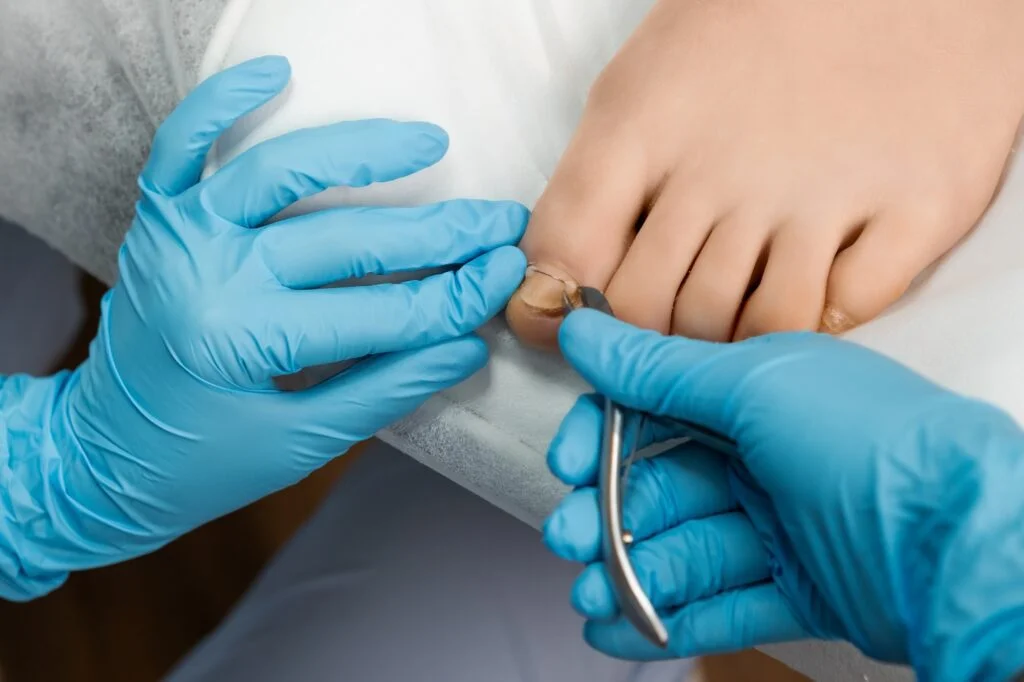
What You Need To Know
Understanding ingrown toenails, their causes, and when to see a podiatrist.
Understanding Ingrown Toenail Treatment
Ingrown toenails are nails where the corners or sides grow into the nearby soft tissue. The big toe is the most common location, but any toenail may become ingrown. Left untreated, an ingrown nail can lead to pain, swelling, and infection.
Common symptoms include pain, swelling, redness, drainage, and odor around the affected toe. These signs can develop gradually or appear suddenly, and they tend to worsen if the nail continues to press into the surrounding skin.
An ingrown toenail may be caused by improper trimming of the nail where the corners are curved. Heredity may play a part, as can pressure on the toes from crowding or tight shoes.
If you suspect an ingrown toenail, soak the foot in soapy water or a warm saltwater bath, then smooth on antiseptic lotion and bandage. If there is no improvement in a day or so, visit your podiatrist. Over-the-counter medications are ineffective, and don’t try to remove any part of the nail yourself. For those with diabetes, peripheral vascular disease, or another circulatory disorder, do not attempt to self-treat an ingrown nail. Get help from a podiatrist as soon as possible.
To eliminate an ingrown toenail, the doctor will remove the ingrown portion and treat the infection with oral or topical medication. For chronic problems, the corner of the nail along with its root will be removed. If you notice drainage, excessive redness, or ongoing pain, schedule an evaluation so treatment can begin promptly.
Preventing Ingrown Toenails at Home
While professional treatment is the right choice for an active ingrown toenail, day-to-day habits play a major role in keeping the problem from returning. A few adjustments to how you trim your nails and choose your shoes can significantly lower your risk.
Start with your footwear. Wear comfortable shoes with a wide toe box so your toes have room to sit naturally without being squeezed together. Tight, narrow, or pointed shoes push the nail edges into the surrounding skin over time. Avoid wearing high heels, which shift your body weight forward and increase pressure on the toes.
How you cut your nails matters just as much. Trim toenails straight across with toenail clippers, and don’t round or dig into the corners. Cutting curves into the corners encourages the nail to grow into the skin as it lengthens. Keep nails at a moderate length, not so short that the skin can fold over the edge.
Handle your nails gently. Don’t tear or rip the nail edges, and avoid picking at hangnails or loose corners, which can create an opening for infection and disrupt healthy nail growth.
If you have diabetes, poor circulation, or nerve issues in your feet, make routine nail care part of your regular podiatry visits. Consistent professional care helps prevent small issues from becoming serious problems down the road.
Find Ingrown Toenail Care Near You
Visit any of our convenient locations for expert ingrown toenail treatment.

Don’t let a painful ingrown toenail keep slowing you down.
We’re here to help you get relief and get back on your feet quickly.