
Pediatric Foot and Ankle Care Services
Expert pediatric podiatry care that helps your child walk, run, and play on healthy, properly developing feet.
What You Need To Know
Understanding pediatric foot health and when to seek care for your child.
Pediatrics at Precision Foot and Ankle
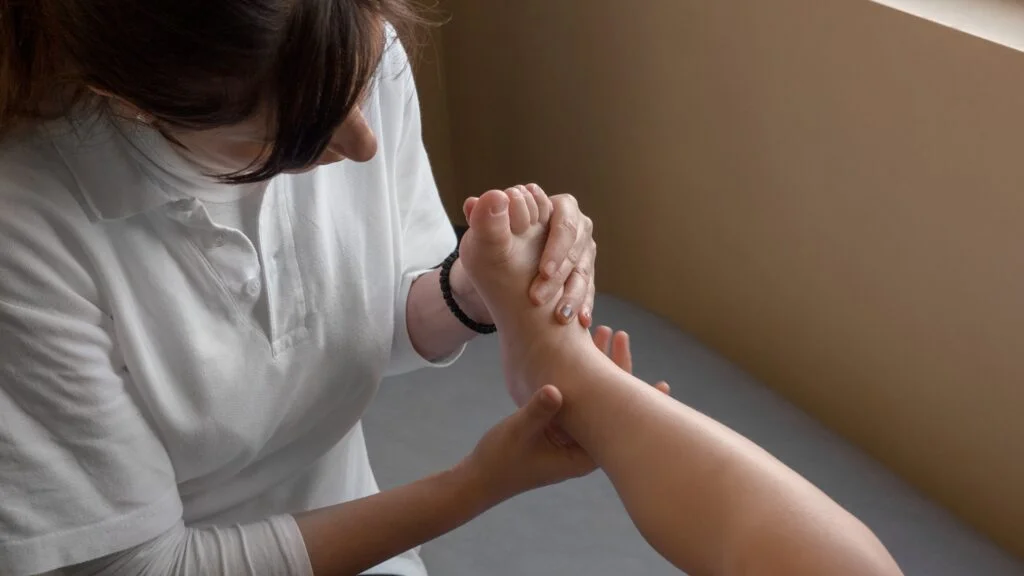
Having strong, healthy feet allows your child to walk, run, and play. If your child’s feet form correctly, certain types of back and leg pain can be avoided later in life. Exams of the feet and ankles ensure that your child’s bones are growing correctly. Your doctor can also make sure that your child is walking right. This helps prevent some future foot problems, and if a problem does arise, it can be treated early, when it is easiest to treat.
The foot’s bone structure is pretty well formed by the time your child reaches age 7 or 8. But if a growth plate (the area where bone growth begins) is injured, the damaged plate may cause the bone to grow oddly. With a doctor’s care, the risk of future bone problems is reduced. An X-ray can show damage to a bone growth plate.
If your child is not participating as often in sports or is complaining of foot pain, don’t assume it’s caused by growing pains. You may also notice frequent falling or tripping. Common types of pain we treat in pediatric patients include heel pain, shin splints, sports injuries, and pain caused by an abnormal gait. When you bring your child to Precision Foot and Ankle Centers, we won’t just treat the symptoms; we will seek the underlying cause and work toward a permanent solution whenever possible. If your child is complaining of foot pain, please schedule an appointment for an evaluation.
Development, Footwear, and Treatment Options
Both the size and shape of your child’s feet change quickly during the first year of life. Because a baby’s feet are flexible, too much pressure or strain can affect the shape of the foot. To help ensure normal growth, allow your baby to kick and stretch. Make sure shoes and socks don’t squeeze the toes. Many infants have feet that appear to turn in. This is rarely a problem, and the shape of the foot changes as your child grows.
Your toddler will walk when he or she is ready. Try not to force the issue. Instead, watch your child’s gait once he or she does begin to walk. If your toddler’s feet are fat, flat, and floppy, don’t worry. This is usually normal, and many toddlers toe-in but outgrow the problem.
If your child’s feet grow correctly and stay healthy, foot problems are less likely later in life. Check your child’s shoe size often and make sure there is space between the toes and the end of the shoe. Wearing shoes that are too small cramps the foot and may affect foot function. Avoid hand-me-down shoes, because most shoes mold to the foot and can affect the shape of your child’s feet.
Custom orthotics are shoe inserts that keep the bones in the feet in proper alignment and can help correct abnormal flat feet and intoeing problems early in development. Corrective shoes, splints, or night braces may be prescribed for feet that turn in or out, and gentle stretching exercises may also help. If a bone or growth plate is damaged, crutches, a cast, splint, or brace may be needed during healing. With the right care plan, most children return to full activity and continue developing on a healthy path.
Related Services
Find Pediatric Care Near You
Visit any of our convenient locations for expert pediatric foot and ankle care.
If your child’s feet hurt, don’t wait to have them checked
We’ll help your child get back to walking, running, and playing comfortably.