
Flat Feet Care, Orthotics and Bracing
Custom orthotics, bracing, and preventive care to support your arches, ease pain, and keep you moving comfortably.
What You Need To Know
Understanding flat feet, why they cause pain, and how supportive care can help.
Flat Feet: Causes, Symptoms, and Treatment
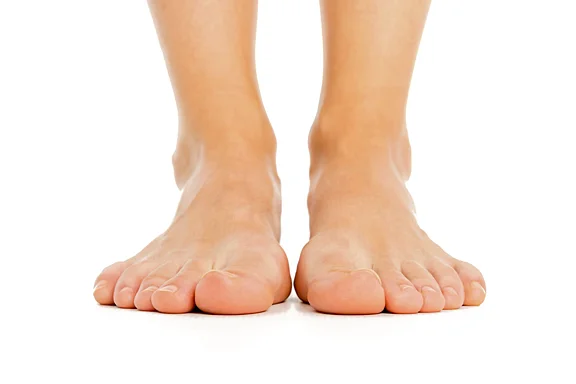
Flat foot is a common condition where the foot’s arch is flattened and the entire sole of the foot touches the ground when standing. Your arch helps absorb force during weight-bearing activities like running and walking. If this arch loses strength, the bony framework begins to collapse, causing your foot to flatten. Like a sagging bridge, the weakness in the middle strains the joints at both ends of your foot.
Flatfeet are common in both children and adults. In children, it is referred to as pediatric flatfoot, which can be symptomatic or asymptomatic. Symptomatic flatfeet exhibit pain and limitation of activity, while asymptomatic flatfeet show no symptoms. Adult-acquired flatfoot is a painful condition caused by inflammation of the posterior tibial tendon, and if untreated it can lead to chronic pain and even serious disability.
Discomfort from flat feet often does not appear for years. Common symptoms include easily-tired feet, aches and pains in the arches and heels, difficulty standing on tip-toe, swollen soles, and hip, leg, and back pain. Children may show outward tilting of the heel, awkwardness in walking, or withdrawal from physical activities.
Flat feet tend to run in families. They can also be caused by nerve issues, rheumatoid arthritis, damaged tendons, or an injury. If flat feet are diagnosed at an early age, chances are good that nonsurgical treatment can help. Schedule a consultation with Precision Foot and Ankle Centers for a comprehensive evaluation.
Treatment Options and Self-Care Tips
To determine the best treatment, your podiatrist reviews your medical history, asks about the length and frequency of your symptoms, and performs a complete examination of your foot, including a gait analysis to observe the movement and stability of your legs and feet as you walk. X-rays may be taken to determine the severity of the deformity. If other problems are suspected, MRI or CT may be ordered to reveal cross-sectional images of soft tissue and bone.
If you must limit your activities because of pain, non-invasive therapies include stretching exercises, physical therapy, icing, supportive taping or bracing, anti-inflammatory medication, custom-fitted orthotics, and supportive shoes. Custom orthotics can readjust the weight-bearing position of your feet, and soft, semi-flexible, or rigid inserts may be used depending on your weight and activity level.
At home, try a simple stretch for your soles and tendons: lean on something stationary, with one leg in front of the other and both heels flat. Bend the front knee and hold for 10 seconds. Then bend your back knee, bringing the heel up, and hold for 10 seconds. Repeat 5 times with each leg.
Be sure your shoes are supportive and comfortable, with enough space in the toe box for toes to wiggle. Warm-water soaks or ice massages can help relieve pain, but if you have diabetes or a circulation problem, talk with your podiatrist first. If symptoms persist, surgery may be discussed to relieve pain and restore normal function.
Find Flat Feet Care Near You
Visit a Precision Foot and Ankle Centers location for orthotics, bracing, and preventive care.
Ready to give your arches the support they’ve been missing?
We’re here to help you walk comfortably again. Let’s schedule your visit today.