
Plantar Fasciitis and Heel Pain Relief
Get to the root of morning heel pain and lasting foot discomfort with treatment plans built around your daily life.
What You Need To Know
Understanding why your heel hurts is the first step toward lasting relief.
Understanding Plantar Fasciitis and Heel Pain
Heel pain may occur on the bottom of the heel, or on its front or back, and may have many causes. In general, heel pain results from walking gait abnormalities that put too much pressure on the heel bone and the surrounding area. This stress may also come from an injury, from activity, being overweight, or wearing poorly constructed shoes.
Plantar fasciitis is one of the most common causes of heel pain. The plantar fascia is a band of tissue that runs along the bottom of the foot from the heel bone to the toes, and it helps form the foot’s arch. With overuse such as running or standing for long periods on hard surfaces, or from wearing shoes with little support, tiny tears can develop in the fascia, causing inflammation, pain, and sometimes a heel spur.
With plantar fasciitis, the bottom of your foot may hurt when you stand, especially first thing in the morning because the fascia has contracted overnight. Pain usually occurs near where your heel and arch meet, often described as sharp, burning, or throbbing. It may ease after a few steps but returns after rest or prolonged activity.
Poor foot mechanics are often to blame. If your foot flattens too much, the fascia may overstretch and swell. If it flattens too little, the fascia may ache from being pulled too tight. Other sources of heel pain include heel spurs, excessive pronation, Achilles tendonitis, arthritis, bursitis, and Haglund’s deformity.
If pain and inflammation persist despite resting and icing, contact your podiatrist. We will examine the area and take X-rays to rule out bone problems and confirm the source of your pain.
Treatment Options and Prevention
Reducing symptoms is your podiatrist’s first goal. Once plantar fasciitis has been identified, non-invasive treatments include resting and icing the area, along with anti-inflammatory medication. For more severe pain and swelling, a steroid injection can relieve inflammation. Taping or strapping the foot can support the arch and temporarily control movement while tissues rest.
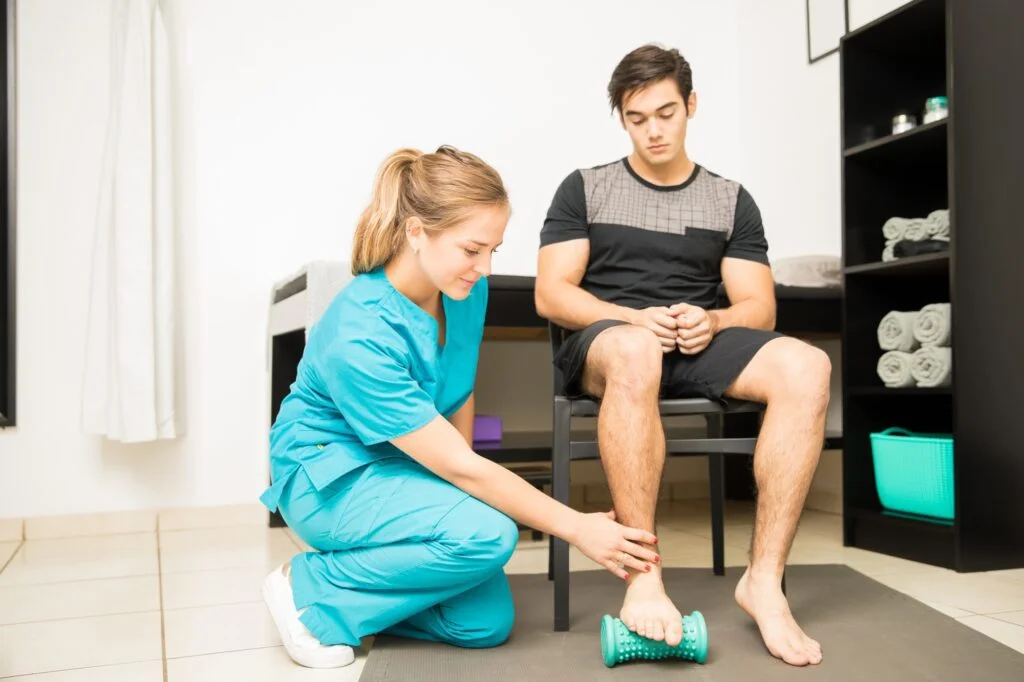
Physical therapy is very effective for heel pain. Strengthening and stretching exercises, ultrasound, and massage help restore the plantar fascia’s flexibility. Wearing a night splint to keep the fascia stretched during sleep can also make a meaningful difference in morning pain.
If your pain is due to poor foot mechanics, custom-fitted orthotics may help. Built from casts of your feet, these inserts control pronation, correct biomechanical imbalance, and support the ligaments and tendons to relieve heel pain without surgery. We also offer shockwave therapy for persistent cases. In very few situations, surgery is needed to release the plantar fascia or remove a bone spur or bursa.
Some lifestyle changes can help prevent a return of plantar fasciitis. Lose excess weight if needed, avoid running on hard or uneven ground, and choose sturdy shoes with good support. Avoid high heels, and wear shoes or house slippers that support your arch at home. Low-impact activities such as biking and swimming are easier on your heels than running, and regular calf stretching helps keep the fascia flexible.
With a consistent plan and small daily habits, most patients see steady improvement and return to the activities they enjoy.
Find Heel Pain Care Near You
Visit a Precision Foot and Ankle Centers location convenient to your home or work.
Don’t let heel pain slow you down another morning, let’s get you moving comfortably again.
We’re ready to help you find lasting relief. Book a visit near you today.